

CNC Machining for Mold Manufacturing
CNC machining for mold manufacturing ensures stable precision and repeatability in mold production processes. Mold manufacturing requires much more than simply cutting metal. A high-quality mold must maintain precise dimensions, smooth surfaces, and stable performance through thousands or even millions of production cycles. CNC machining plays a critical role in modern mold making because it allows manufacturers to produce complex cavities, detailed contours, and accurate mold components with stable repeatability.
Why precision is so important in mold manufacturing
In mold production, even a very small machining error can affect the final molded product. Poor surface finish, inaccurate cavity dimensions, or unstable machining can lead to flashing, fitting problems, poor product appearance, or reduced mold life. This is why mold manufacturers rely heavily on CNC machining for accurate cavity machining, contour milling, and stable dimensional control.
Common molds and tooling components
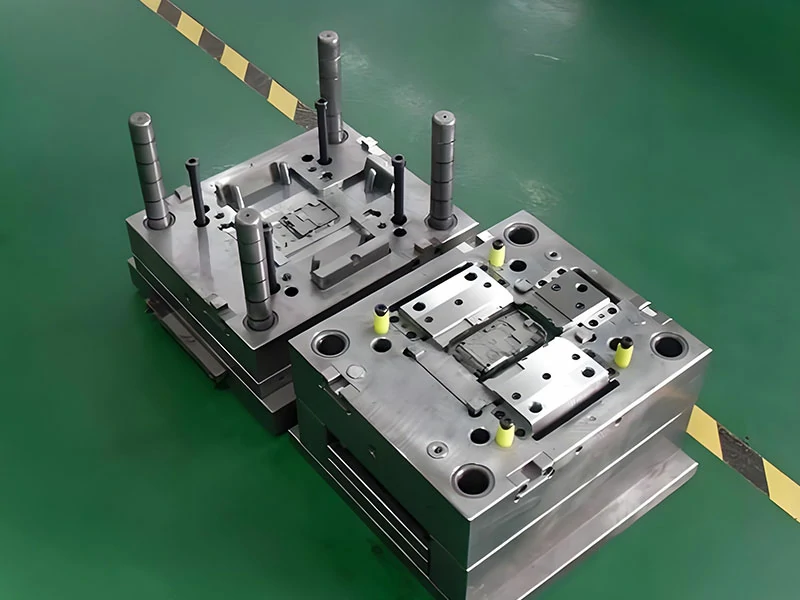
CNC machining is widely used for injection molds, aluminum molds, steel molds, die casting molds, fixture plates, and custom tooling parts. Many industries depend on precision molds, including automotive, medical, electronics, household products, and industrial manufacturing. Mold structures often include deep cavities, curved surfaces, cooling channels, and fine corner details that require accurate multi-axis machining.
How CNC machining improves mold quality
Compared with traditional manual machining, CNC machines can maintain much better consistency during long machining operations. Advanced CNC systems help reduce human error while improving machining stability, surface quality, and repeatability. This is especially important for molds that require precise fitting surfaces and smooth internal cavity finishes.
Multi-axis machining also allows manufacturers to machine complex shapes from different angles without repeated repositioning, helping improve both efficiency and accuracy.
Materials commonly used in mold making
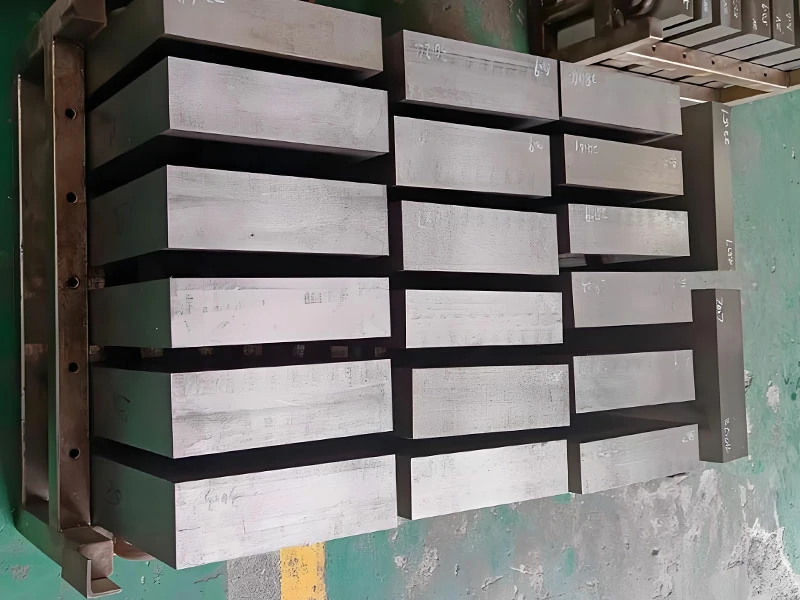
In modern manufacturing, CNC machining for mold manufacturing is widely used for high-precision tooling and industrial mold production. Mold manufacturing often uses hardened steel, tool steel, stainless steel, and aluminum alloys. Different mold applications require different material properties such as wear resistance, thermal stability, or polishing performance. CNC machining makes it possible to process these materials accurately while maintaining dimensional stability during heavy cutting operations.
Machines commonly used for mold machining
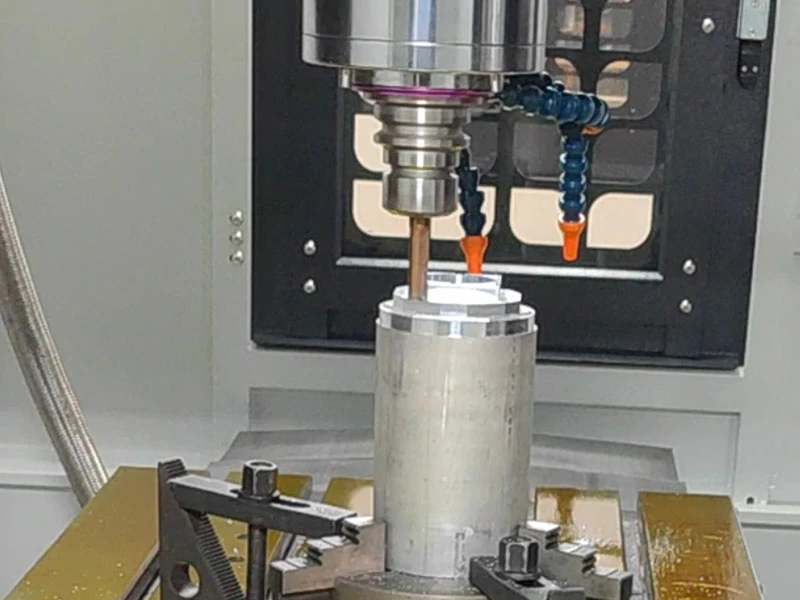
Different mold structures require different machining equipment. Vertical machining centers are commonly used for cavity milling and general mold processing. High-speed CNC machines help achieve smoother surface finishes, while 5-axis machining centers are widely used for complex curved surfaces and deep cavity machining.
EDM and precision finishing processes are also commonly combined with CNC machining for detailed mold features and sharp internal corners.
Why CNC machining for mold manufacturing continues to grow
Modern mold manufacturing demands shorter lead times, better surface quality, and higher production stability. CNC machining helps manufacturers produce molds faster while maintaining consistent quality across every machining stage. It also supports rapid mold modifications, prototype tooling, and custom mold development for different industries.
With the right machining strategy and stable equipment, manufacturers can reduce polishing time, improve mold accuracy, and extend overall mold service life.
Industrial Importance of Mold Machining
CNC machining for mold manufacturing plays a critical role in modern industrial production systems. High-quality molds directly determine product consistency, production efficiency, and long-term manufacturing stability across industries such as automotive, electronics, and consumer goods.
With the increasing demand for complex product structures and high-volume production, manufacturers rely more on CNC machining to achieve better accuracy, faster turnaround time, and improved mold durability.
Learn more about machining standards at Sandvik Coromant .
Frequently Asked Questions
Common questions about CNC machining for mold manufacturing, precision tooling, and industrial mold production.
CNC machining for mold manufacturing is a precision process used to produce injection molds, steel molds, aluminum molds, and tooling components. It ensures stable accuracy, smooth surface finish, and repeatable performance for high-volume production.
Even small machining errors can affect molded product quality, causing flashing, dimensional mismatch, or reduced mold lifespan. High precision CNC machining ensures stable cavity accuracy and consistent product output.
CNC machining is widely used for injection molds, die casting molds, aluminum molds, steel mold bases, and custom tooling parts used in automotive, electronics, and industrial production.
Vertical machining centers, high-speed CNC machines, and 5-axis machining centers are commonly used for mold cavities, complex surfaces, and precision tooling structures. EDM machining is also used for fine details and sharp corners.
Common materials include tool steel, hardened steel, stainless steel, and aluminum alloys. Each material is selected based on wear resistance, thermal stability, and polishing requirements.
CNC machining improves production speed, accuracy, and mold durability. It allows manufacturers to produce complex mold structures with shorter lead times, higher consistency, and better surface quality.