

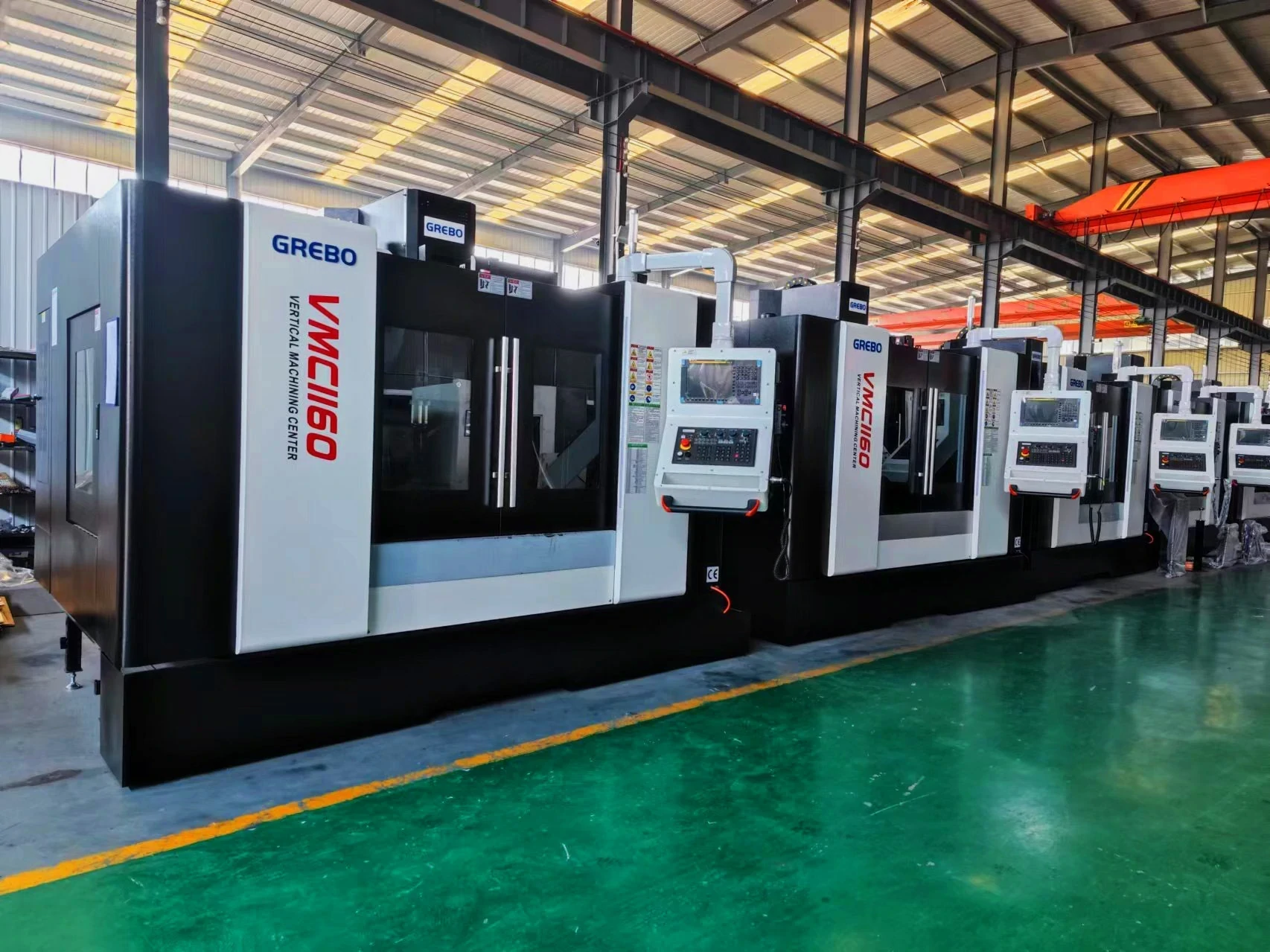

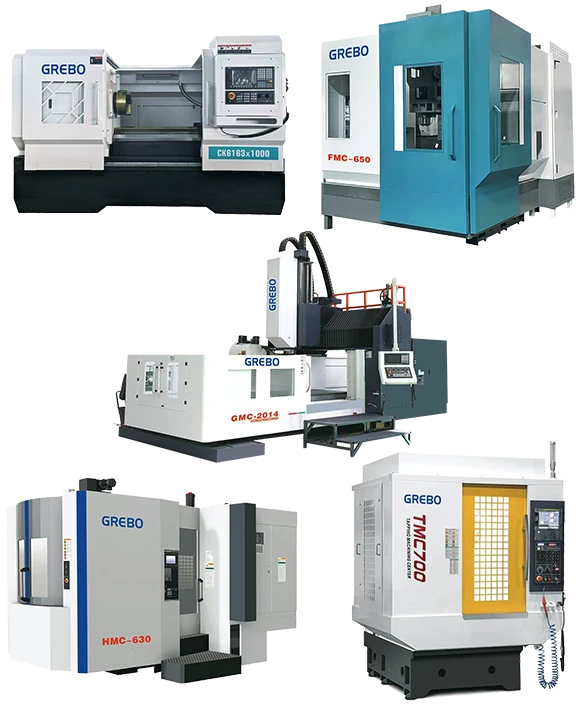
When evaluating the different Types of CNC Machining Centers, you need to understand that they are not simply different “models” of the same machine. They represent fundamentally different structural kinematics, each engineered to solve specific manufacturing bottlenecks.
In this guide, we will break down the four primary CNC machining center types—Vertical (VMC), Horizontal (HMC), 5-Axis, and Gantry. Whether you are running a high-mix job shop or a mass-production automotive line, understanding these differences is the foundation of a successful machining center selection strategy.
1. Vertical Machining Center (VMC): The Workhorse of the Shop Floor
The Vertical Machining Center is the most common type of CNC machine in the world. Its defining feature is a vertically oriented spindle that presses the cutting tool down onto the workpiece from above. Think of it as a highly automated, precision drill press.
Why Shops Love VMCs
- Visibility and Operability: The vertical layout gives operators a clear line of sight to the cutting zone. Setup, workpiece indication, and program debugging are highly intuitive.
- Cost-Effectiveness: VMCs have a simpler structural design, requiring less floor space and offering a much lower initial investment compared to horizontal or 5-axis alternatives.
- Gravity-Assisted Clamping: For plate-like parts, gravity pushes the workpiece down against the table, ensuring extremely stable clamping during heavy cuts.
The Reality Check (Limitations)
- Chip Evacuation Nightmares: When machining deep cavities or blind holes, chips tend to pool at the bottom of the cut. This leads to “re-cutting,” which ruins surface finishes and accelerates tool wear.
- Multi-Sided Bottleneck: Standard 3-axis VMCs can only machine the top face and vertical walls efficiently. Machining multiple sides requires manual re-fixturing, which introduces cumulative positioning errors.
Best Applications
VMCs are the undisputed kings of “short and stout” prismatic parts. They excel at mold bases, fixture plates, brackets, and general-purpose parts where the geometry is primarily accessed from the top down.
2. Horizontal Machining Center (HMC): The Mass Production Powerhouse
If high-volume production and complex box-type parts are your daily reality, the Horizontal Machining Center is the logical upgrade. The spindle is mounted horizontally, cutting into the workpiece from the side. HMCs are the ultimate remedy for complex box parts that require multi-sided access.
Why Shops Love HMCs
- Superior Chip Evacuation: Gravity works in your favor. Chips fall naturally away from the cutting zone into the conveyor. This keeps the cut clean, protects the machined surface, and allows for much more aggressive cutting parameters.
- Single-Setup Multi-Sided Machining: Equipped with an indexing rotary table (B-axis) and tombstone fixtures, an HMC can machine four sides of a part in a single clamping. This eliminates setup errors and drastically reduces cycle times.
- Automation Ready: HMCs are easily integrated with dual-pallet changers or robotic loaders, making them the ideal platform for “lights-out” unattended manufacturing.
The Reality Check (Limitations)
- The “Iceberg” Cost: The machine itself is 2 to 3 times more expensive than a VMC. Furthermore, the required tombstone fixtures, precision pallets, and tool setters represent massive hidden investments.
- Footprint and Complexity: HMCs are physically larger, require robust foundations, and demand higher-level CAM programming and process engineering skills.
Best Applications
HMCs dominate the automotive and hydraulics sectors. They are specifically engineered for engine blocks, transmission housings, valve bodies, and pump casings—parts that require strict cross-face positional tolerances and high-volume throughput.
3. 5-Axis Machining Center: The Geometry Master
When parts feature complex contours, undercuts, or angled features, traditional 3-axis machines fall short. The 5-Axis Machining Center adds two rotational axes to the three linear axes, allowing the cutting tool to approach the workpiece from virtually any direction. This advanced CNC technology eliminates the need for complex, multi-part fixtures.
Why Shops Love 5-Axis
- Single-Setup Completeness: Complex parts that previously required 4 or 5 setups on a VMC can now be finished in one clamping. This dramatically reduces lead times and eliminates accumulated positional errors.
- Superior Surface Finish: The 5-axis capability allows the controller to tilt the tool or part to maintain the optimal cutting angle and use shorter, more rigid tools. This results in smoother surface finishes and better tool life.
- Complex Geometry Capability: It can machine impellers, turbine blades, and medical implants that are physically impossible to make on a 3-axis machine.
The Reality Check (Limitations)
- High Capital and Programming Costs: True 5-axis simultaneous machines are expensive. Additionally, they require advanced 5-axis CAM software and highly skilled programmers to avoid collisions and optimize toolpaths.
Best Applications
5-axis centers are critical in aerospace (structural components, blisks), medical (orthopedic implants), and high-end mold making. If your competitive advantage relies on complex geometries and tight tolerances, 5-axis is non-negotiable.
4. Gantry Machining Center: The Heavy-Duty Giant
Also known as a double-column machining center, the Gantry Machining Center features a bridge-like structure where the spindle carriage moves across a beam supported by two massive columns. The workpiece is typically mounted on a fixed bed. They are the undisputed workhorses for massive, heavy-duty components.
Why Shops Love Gantry Mills
- Unmatched Rigidity and Stability: The symmetrical bridge structure absorbs massive cutting forces with minimal vibration, ensuring high precision even during heavy-duty roughing.
- Massive Work Envelope: Because the table is fixed and the spindle moves over it, the X-axis and Y-axis travel can be extended almost indefinitely. They can handle workpieces that simply cannot fit inside a C-frame VMC or HMC.
The Reality Check (Limitations)
- Space and Cost: These are the most expensive and space-consuming machines in the shop. They often require specialized rigging and heavy-duty cranes just to load the raw material.
Best Applications
Gantry centers are the backbone of heavy industry. They are used for large-scale aerospace structural frames, wind turbine hubs, injection molds for automotive bumpers, and marine engine components.
Quick Comparison: VMC vs HMC vs 5-Axis vs Gantry
To simplify your machining center selection process, here is a direct comparison of the four main CNC machining center types:
| Feature | VMC (Vertical) | HMC (Horizontal) | 5-Axis | Gantry |
|---|---|---|---|---|
| Spindle Orientation | Vertical (Top-down) | Horizontal (Side-cut) | Multi-directional | Vertical (Bridge-style) |
| Core Strength | Cost-effective, easy setup | Chip evacuation, multi-sided | Complex geometry, single setup | Massive parts, heavy rigidity |
| Typical Workpiece | Plates, molds, brackets | Boxes, valve bodies, housings | Impellers, implants, aerospace | Large frames, big molds |
| Relative Cost | Low – Medium | Medium – High | Very High | Extremely High |
| Automation Level | Low to Medium | High (Pallet pools) | Medium | Low |
Machining Center Selection: How to Choose the Right One?
Selecting the right machine is not about buying the most advanced technology; it is about matching the machine’s capabilities to your specific production reality. When conducting a machining center selection, evaluate these three critical factors:
1. Part Geometry and Complexity
If your parts are mostly flat or require 2.5D profiling, a VMC is the most economical choice. If you are machining complex box parts with strict cross-hole tolerances, an HMC will save you hours of setup time. For aerospace contours or medical implants with undercuts, a 5-axis machine is mandatory. For parts that simply won’t fit inside a standard enclosure, you need a Gantry.
2. Production Volume and Batch Size
For high-mix, low-volume job shops, the flexibility and low fixture cost of a VMC is king. However, if you are running batches of 500+ identical parts, the automated pallet changers and reduced cycle times of an HMC will drastically lower your cost-per-part, delivering a much faster ROI.
3. Floor Space and Infrastructure
Never overlook the physical constraints of your shop. HMCs and Gantry mills require significantly more floor space, and heavy HMCs or Gantry machines may require reinforced concrete foundations to handle the vibration and weight. Always map out your machining applications and facility layout before finalizing the purchase.
Final Thoughts: Aligning Machine Types with Your Business Strategy
Understanding the different Types of CNC Machining Centers is the first step toward building a highly profitable and efficient manufacturing operation. There is no single “best” machine; there is only the right machine for your specific part geometry, production volume, and budget.
As a technical sales representative working directly on the production floor, I help global buyers navigate these exact decisions every day. Whether you need a versatile VMC for your job shop, an automated HMC for your production line, or a specialized 5-axis for complex components, we provide direct factory access and transparent technical support.
Ready to optimize your shop floor? Contact us today to discuss your part drawings and get a customized machining center selection proposal directly from our engineering team.
Frequently Asked Questions (FAQ)
The primary difference lies in the spindle orientation and chip evacuation. A VMC has a vertical spindle, making it ideal for flat parts and easier to operate. An HMC has a horizontal spindle, which allows chips to fall away naturally and enables multi-sided machining in a single setup, making it superior for high-volume production of complex box parts.
It depends on your part complexity. If you frequently machine parts with complex 3D contours, undercuts, or tight positional tolerances that require multiple setups on a 3-axis machine, a 5-axis center will drastically reduce cycle times, eliminate setup errors, and open up higher-margin contracts (like aerospace and medical). For simple prismatic parts, the high cost of a 5-axis machine is not justified.
You should choose a Gantry (double-column) machining center when your workpieces are too large, too heavy, or too long to fit on a standard VMC or HMC table. Gantry mills offer a massive work envelope and exceptional structural rigidity, making them the only viable option for heavy-duty machining of large aerospace structures, massive molds, and heavy industrial components.
Evaluate your current and future order book. Analyze your typical part geometry (flat vs. complex vs. massive), your average batch sizes (prototype vs. mass production), and your required tolerances. Map these requirements against the strengths of VMCs, HMCs, 5-axis, and Gantry machines to find the most cost-effective solution for your specific machining center selection needs.